

When Talia Papi-Grant was diagnosed with breast cancer a year and a half into Yorkville University‘s Master of Arts in Counselling Psychology (MACP) program, she still had 15 weeks of coursework remaining – but she was determined to finish.
.
“My first thought was that this couldn’t stop me from finishing my program…I had set a goal, and I was committed to achieving it – not only for myself, but for my children,” said the mother of three. “I wanted to show them that even when we face obstacles and challenges, with the right mindset, we can overcome difficulties and achieve success.”
.
While undergoing chemotherapy, she continued working toward her degree, managing intense fatigue and repeated infections that required several rounds of antibiotics within two months. Amid the weariness and uncertainty of treatment, school gave her something to focus on beyond cancer – a sense of purpose and progress as she worked toward graduation.
.
On the second day of her practicum, however, an adrenal crisis related to her immunotherapy forced her to withdraw for the term. Although stepping away was devastating to Papi-Grant, the break gave her time to recover, spend time with her kids and prepare to return to practicum in January.
.
Then, with just three weeks remaining in her practicum, she was diagnosed with Stage IV metastatic cancer and underwent brain surgery to remove a tumour.
.
Nevertheless, just a week and a half after surgery, she submitted her Capstone paper and reflection – on time – before returning to see clients to complete her final 12 sessions.
.
“Staying optimistic and searching for silver linings, even in the most difficult moments, kept me focused and helped me overcome many obstacles,” Papi-Grant said, praising her professors, Dr. Matthew Glowiak and Dr. Beth Triano, for offering her the support and encouragement she needed to push through.
.
“My determination to finish the program on schedule enabled me to achieve my ultimate goal. Telling my children that I had completed the program and witnessing their excitement and happiness made all the challenges worthwhile.”
.
A Return to Mental Health
.
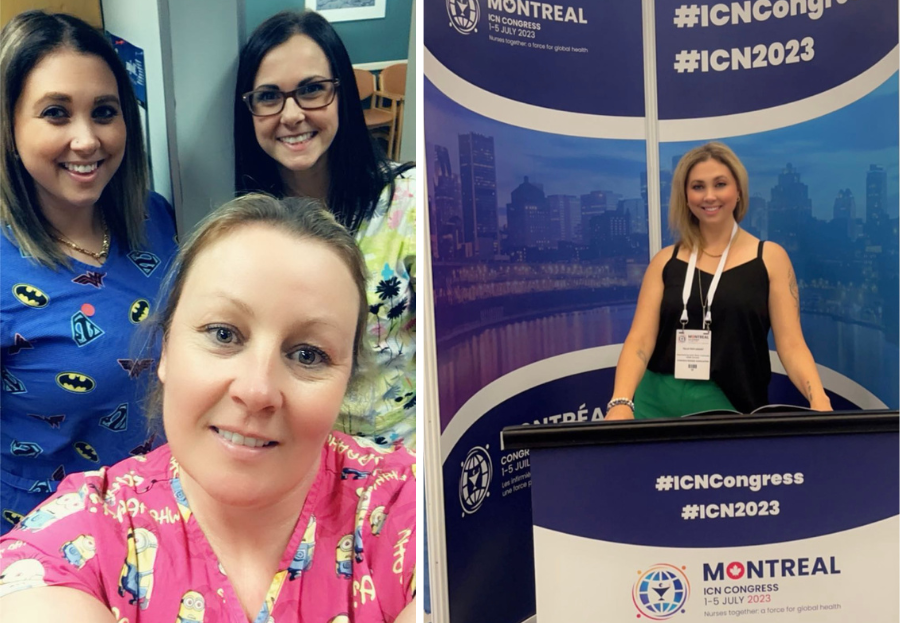
Before enrolling at Yorkville, the Sault Ste. Marie, Ontario-based Papi-Grant spent 18 years working as a nurse, eventually becoming a Community Health Services Manager.
.
It was in that role, she said, that she witnessed firsthand the increasing need for mental health support and the urgent demand for more mental health professionals in her community and beyond.
.
“With limited resources, too many people felt isolated, struggling to find the help they needed,” she said.
.
With a background in psychology, Papi-Grant had long felt drawn to the mental health field and her experiences as a nurse reinforced her desire to return to it.
.
“My educational journey began with a B.A. in Psychology, and I had always felt a deep pull to return to the mental health field,” she said. “As the demand grew stronger, so did my determination – making it clear that now was the perfect moment to take the next step and make a meaningful difference.”
.
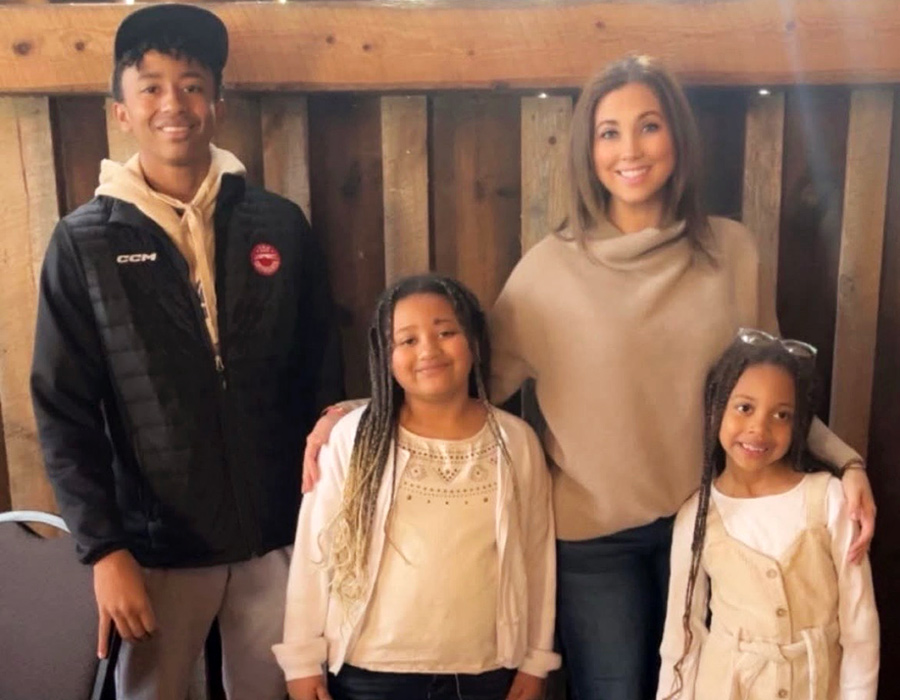
While returning to school in the midst of working full-time and raising three children – son Riley, now 16, and daughters Evangeline, 11, and Gianna, 8 – presented its own challenges, Papi-Grant said the flexibility of Yorkville’s online program helped her balance her responsibilities.
.
Finding Meaning in Practicum
.
Some of Papi-Grant’s favourite memories of her studies at Yorkville were practicing her skills in her practical assessment sessions and Applying Interventions course, where working with classmates and instructors helped her refine her counselling skills, take risks and receive feedback.
.
Yorkville’s MACP program integrates counselling theory, assessment, professional ethics, and evidence-based therapeutic approaches though online coursework and synchronous skill development.
.
Students also complete a 400-hour, 30-week supervised practicum supported by two sequential instructor-led courses in their own communities or remotely, while progressing toward provincially and nationally recognized pathways to professional practice.
.
It was during her practicum, Papi-Grant said, that she was able to bring together all she had learned throughout the MACP program and apply that knowledge in a counselling setting – an experience that proved especially meaningful to her.
.
“I am most proud of the connections I made with my clients during practicum. I was able to dive deeply into the root of their concerns and help them to reflect on memories and emotions tied to an event that continue to prevent them from moving forward,” she said.
.
“When ‘aha’ moments happened in session, those were the most amazing feelings of gratitude that emerged from being able to be present in the moment with that client.”
.
Those experiences reinforced her interest in helping people process difficult experiences and find ways to move forward.
.

Looking Ahead
.
Since completing the MACP program, Papi-Grant has continued to expand her knowledge through specialized courses in Performance Anxiety and Somatic Therapy.
.
“My passion lies in private practice, where I help individuals overcome performance anxiety and support breast cancer patients and survivors as they process emotional trauma,” said Papi-Grant, who currently works at Mending Minds Counselling.
.
She was recently invited to speak to a local college hockey team about managing performance anxiety, sharing practical strategies for reducing stress. She also hopes to establish a peer support group for cancer patients and survivors once she has completed her own treatment and is ready to return to counselling full-time.
.

For those considering returning to school but waiting for the right time, she encourages them not to let uncertainty hold them back.
.
“Having completed the MACP program while undergoing cancer treatment, I can truly say there is never a perfect time to pursue your dreams – life can change in an instant,” she said.
.
“If you feel called to work in the mental health field and want to make a difference in the lives of others, don’t wait for the stars to align. Embrace the journey, even if it feels daunting or uncertain. Challenges will arise, but they will shape your resilience, deepen your empathy, and prepare you for a rewarding career as a psychotherapist.”
.
After all, she added, the impact you will have on others and the sense of purpose you will gain far outweigh any doubts or fears you may have now.
.
“Trust in your calling, take the leap, and let your courage inspire those around you.”